

14 Jan Teaching African Identity Through Fashion
“The clothes our children wear can do more than make them look good, they can help them understand who they are.”
What does it mean to grow up African?
For some children, it’s hearing folktales from their grandparents. For others, it’s speaking a local language, enjoying traditional meals, or dancing at family celebrations.
But there’s another powerful teacher that often goes unnoticed.
Fashion.
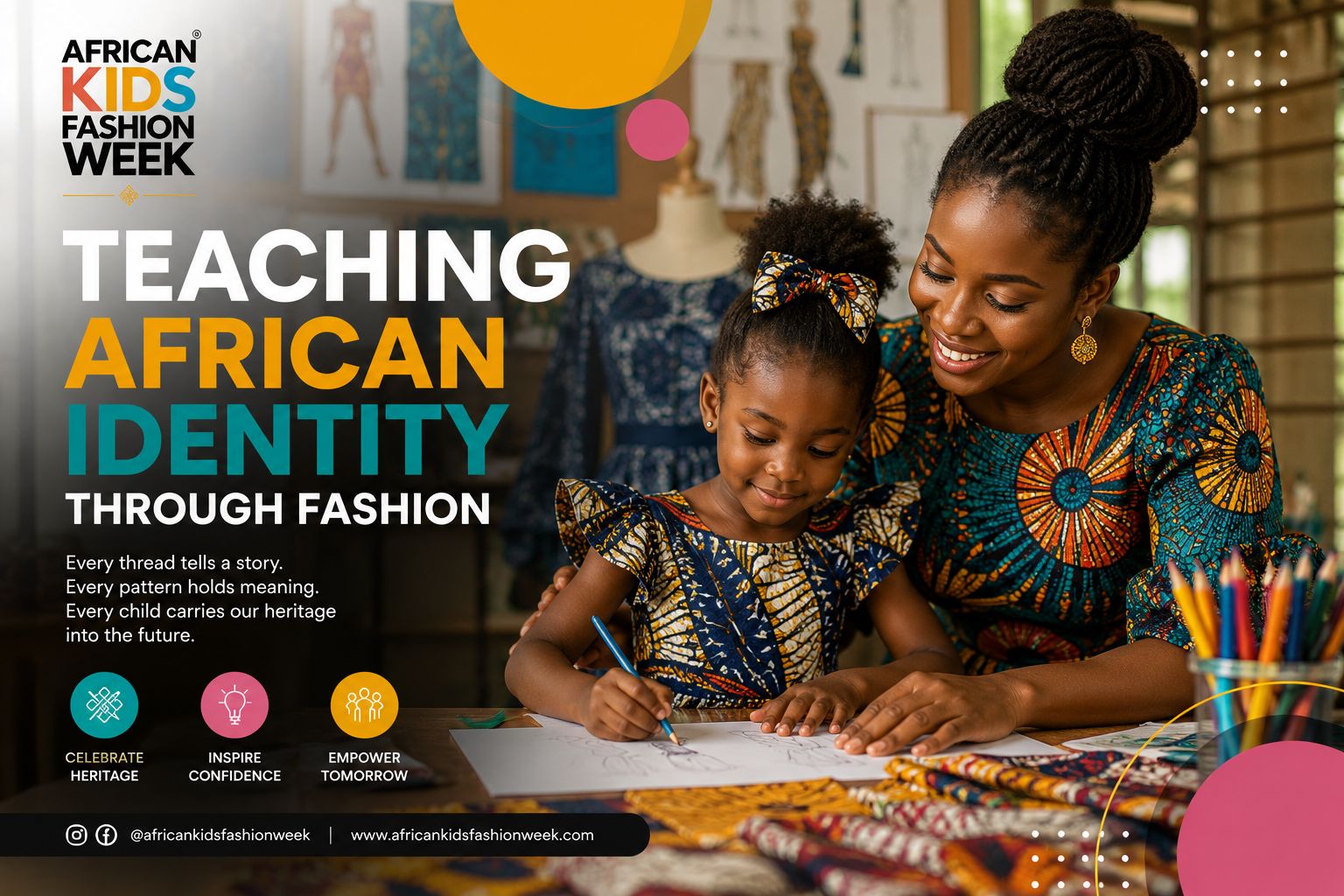
Every time a child wears a garment inspired by African heritage, they are introduced to a story, one that connects them to generations before them. Fashion becomes more than style; it becomes a bridge between the past and the future.
Every Fabric Has a Story
Across Africa, textiles are more than beautiful materials.
Adire from Nigeria, Kente from Ghana, Aso Oke, Bogolanfini from Mali, and many other traditional fabrics all carry history, meaning, and identity. Their patterns often represent wisdom, strength, family, celebration, or community.
When children learn the stories behind these fabrics, they begin to see their culture as something valuable and worth celebrating. A dress is no longer just a dress, a shirt becomes more than clothing, It becomes a conversation.
Identity Begins at Home
Children are naturally curious. They ask questions about everything.
“Why is this fabric blue?”
“Who made these patterns?”
“Why do we wear this during celebrations?”
These simple questions open the door to meaningful conversations about history, tradition, and belonging. Parents don’t need long history lessons. Sometimes, a simple story shared while getting dressed is enough to spark curiosity that lasts a lifetime.
Fashion Builds Confidence
There is something powerful about seeing yourself represented. When children wear outfits that reflect their heritage, they begin to understand that their culture is beautiful. They walk taller, they smile a little brighter, and they become proud of where they come from. That confidence is something they carry far beyond the runway, into classrooms, friendships, and eventually, adulthood.
Tradition Can Be Modern
One of the biggest misconceptions about African fashion is that it belongs only at weddings, festivals, or cultural celebrations. Today’s designers are changing that.
They are blending traditional textiles with modern silhouettes to create outfits children can wear to birthdays, family gatherings, school events, and even international fashion shows. This tells children something important: They don’t have to choose between being modern and being African, they can be both.
Fashion Connects Generations
One of the most beautiful things about African fashion is how it brings families together. A grandmother may recognize a pattern she wore as a young woman. A parent may remember wearing Adire or Aso Oke at a family celebration. Now a child wears that same heritage in a fresh, contemporary design. In that moment, fashion becomes more than clothing. It becomes a shared family story.
Preparing the Next Generation
The future of African fashion depends on today’s children. Some will become designers, some will become photographers, stylists, textile artists, entrepreneurs, or storytellers. Others may simply grow up appreciating the creativity and craftsmanship behind African fashion. Every one of them plays a role in keeping our heritage alive.
By introducing children to African fashion today, we are planting seeds that will continue to grow for generations.
A Future Rooted in Pride
Teaching African identity isn’t about looking backwards, it’s about moving forward with confidence. It is about helping children understand that their culture is not something to hide or outgrow, but something to cherish and share with the world.
At African Kids Fashion Week, we believe every runway is an opportunity to celebrate creativity, honour heritage, and inspire the next generation to wear their identity with pride.
Because when children understand where they come from, they become confident about where they are going. That is one of the greatest gifts we can give them.
African Kids Fashion Week
Rooted in Culture. Made for the World.
No Comments